




Ask a Question About This Product
Specifications
Color: Clear
Operating temperature range: 93°C to 149°C
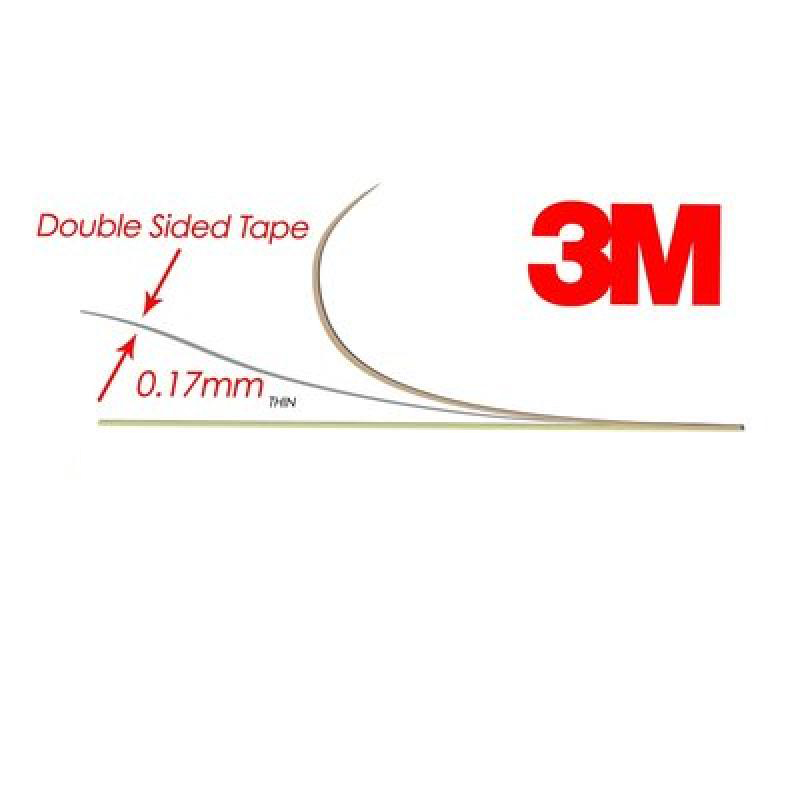
Total tape thickness (without liner): 0.17 mm (6.7 mil)
Compatible substrates: Glass, High surface energy (HSE) plastics, Low surface energy (LSE) plastics, Metals
Applications
Battery bonding
Battery door attachment
Bezel bonding
Camera module assembly
Case assembly
Cover lens bonding
Display bonding
Electrical insulation bonding
Electronic component bonding
Logo bonding
Low surface energy (LSE) material bonding
Memory card bonding
Module bonding to PET card
Rubber feet bonding
Speaker module assembly
Touch panel bonding
Touchpad assembly
Touchpad bracket assembly
Application Techniques
Bond strength depends on the amount of adhesive-to-surface contact achieved.
Apply firm pressure during installation to maximize adhesive contact.
Moderate heat between 38°C to 54°C (100°F to 130°F) helps improve adhesion.
For best results, bonding surfaces must be: Clean, Dry, Free from dust, oils, and contaminants
Recommended surface cleaning solvents include: Isopropyl alcohol, Heptane
Ideal application temperature range: 21°C to 38°C (70°F to 100°F)
Initial application below 10°C (50°F) is not recommended, as the adhesive may be too firm.
Once properly applied, performance at low temperatures remains satisfactory.
Environmental Performance
Humidity Resistance
High humidity has minimal impact on adhesive performance.
No significant reduction in bond strength after 7 days at 32°C (90°F) and 90% relative humidity.
UV Resistance
Properly applied bonds are not adversely affected by direct sunlight exposure.
Suitable for nameplates and decorative trim applications.
Water Resistance
Water immersion has no appreciable effect on bond strength.
After 100 hours of water immersion at room temperature, bond strength remains high.
Temperature Cycling Resistance
Maintains high bond strength after repeated temperature cycling: 4 hours at 70°C (158°F), 4 hours at -29°C (-20°F), 4 hours at 22°C (73°F)
Tested through four complete cycles.
Chemical Resistance
When properly applied, bonds remain secure after exposure to: Oils, Mild acids, Mild alkalis